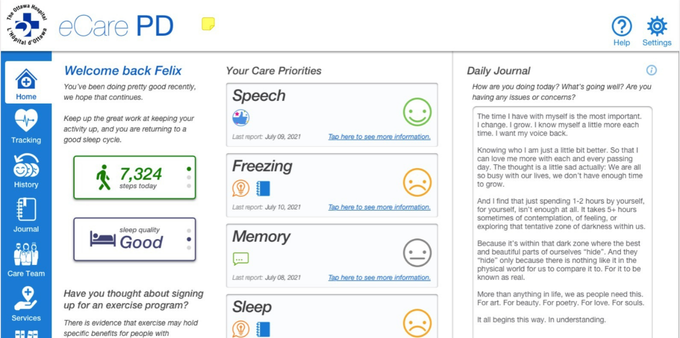
This timeline shows my research journey. It all started with the task of redesigning eCare-PD, a self-care companion for people living with Parkinson’s.
For the full story of the project since 2017 (stages, participants’ voices, publications, prototypes and how the self-care taxonomy evolved), explore the interactive eCARE-PD timeline.
Timeline
Oct 2024
Involvement
I started working as a Research Assistant at the Com&Tech Innovations Lab directed by Professor Sylvie Grosjean.
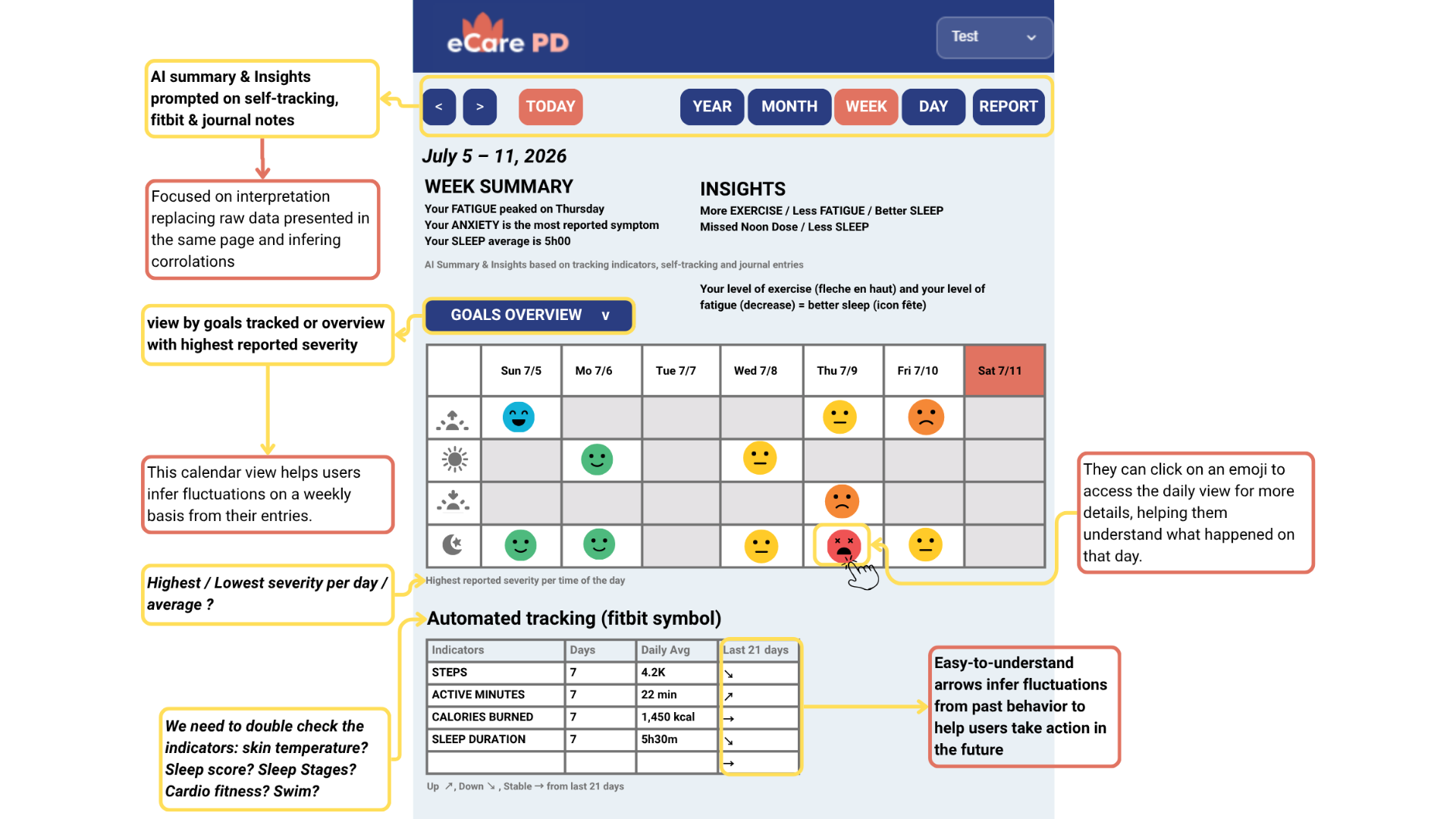
Sylvie Grosjean, together with Leylah Alwash and Elaine Ho, analyzed and presented the results of a diary-based usability study of e-Care PD, an app to track care priorities for people living with Parkinson developed by Macadamian Technologies. The study highlighted the need to improve how people living with Parkinson’s disease are supported in setting self-care goals, enhance the personalization of recommendations, and improve data visualizations to facilitate self-care and help identify patterns in symptoms.
L’autosoin équipé et alimenté par l’Intelligence Artificielle (IA) : Explorer les usages pour créer un « compagnon numérique
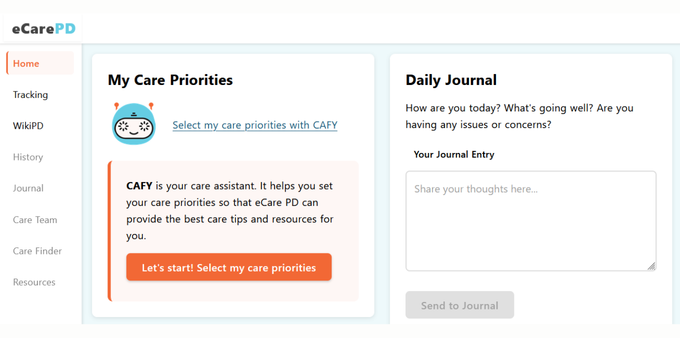
Based on the results of the diary study, I developed a first prototype of CAFY, an assistant designed to help people living with Parkinson’s select self-care priorities. Integrated into a medical dashboard, similar to the previous version, the prototype includes a basic self-care priorities selector as well as WikiPD, the knowledge base structure that would underpin the app. Sylvie Grosjean presented the diary study results and this first iteration of CAFY at Destination Recherche et Innovation Montfort.
Destination Recherche et Innovation Montfort. Montfort Hospital, Ottawa, Canada.
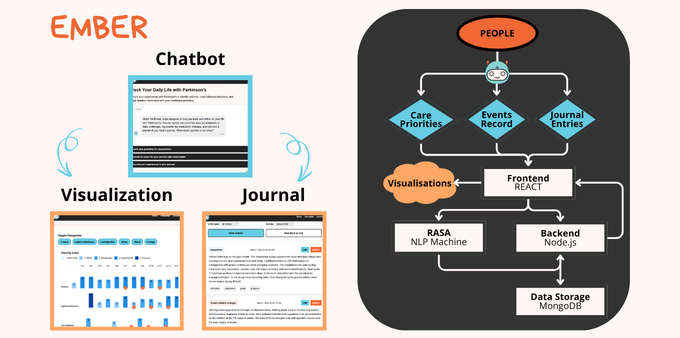
Ember - A memory aid for people living with Parkinson's
I prototyped Ember, an assistant designed as a memory aid for people living with Parkinson’s. Ember helps users track care priorities through a chatbot, visualize health patterns, and document their experiences to support self-care and informed decision-making.
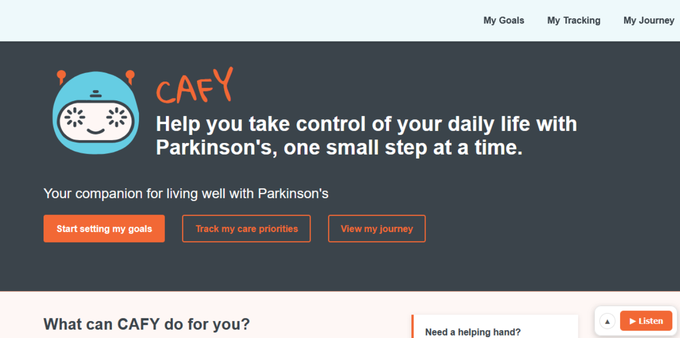
CAFY - a virtual assistant for living well with Parkinson's
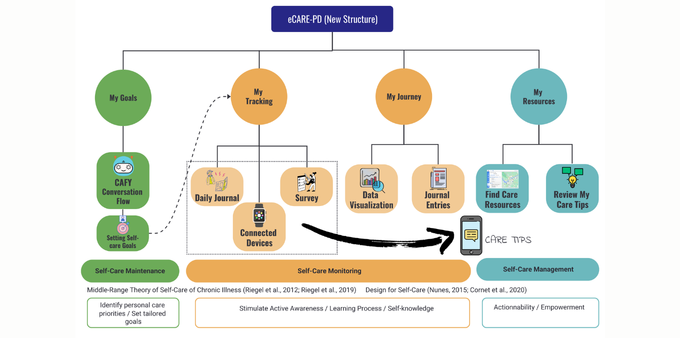
I presented to the Com&Tech Innovations Lab and Dr. Tiago Mestre an initial attempt to transition from a traditional medical dashboard toward a task-oriented user flow that guides users, like a virtual assistant, through selecting self-care goals, tracking their progress, and viewing their overall journey. I also integrated a text-to-speech feature. It was agreed that the platform should be redesigned with the look and feel of a mobile application rather than a website, while redefining its identity with Parkinson Canada colors at the forefront.
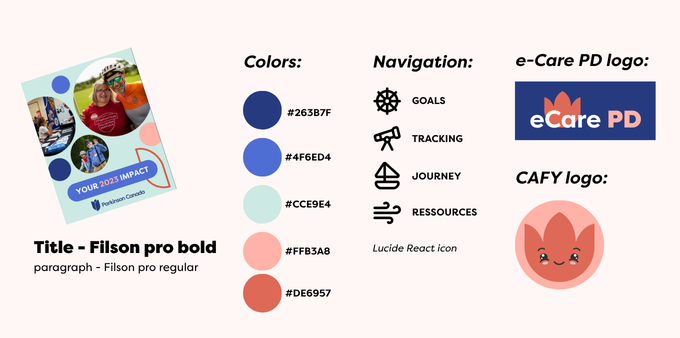
I created a new visual identity aligned with Parkinson Canada’s branding and color palette. I employed navigation-inspired visual symbols to represent the navigational work that people living with Parkinson’s undertake in their self-care journey.
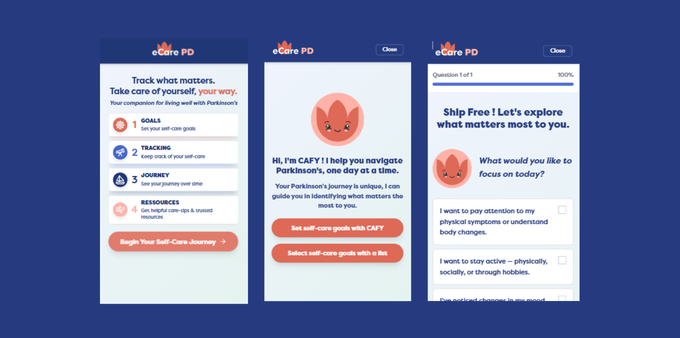
eCare-PD Prototype — A companion app for living well with Parkinson's: CAFY (Care Assistant For You)
Through an iterative design process, Sylvie Grosjean wrote the CAFY conversation to help select self-care priorities, while Nadim Saadeh and the team, including Mae Slabinski and Maryse Kavwahirehi, created care tips ranging from basic to advanced levels of self-care, based on a taxonomy comprising five categories. I focused on bringing these elements together into a new prototype a first complete user flow, enabling users to identify self-care priorities, track their progress, visualize their journey, and access relevant resources.
“What Should I Focus on Today?” Co-Designing a Goal-Setting Dialogue Tool for Parkinson’s Self-Care
We published a conference paper entitled “What Should I Focus on Today? Co-Designing a Goal-Setting Dialogue Tool for Parkinson’s Self-Care,” which was presented at the European Society for Socially Embedded Technologies (EUSSET) conference.
European Society for Socially Embedded Technologies (EUSSET). Com&Tech Innovations Lab, University of Ottawa.
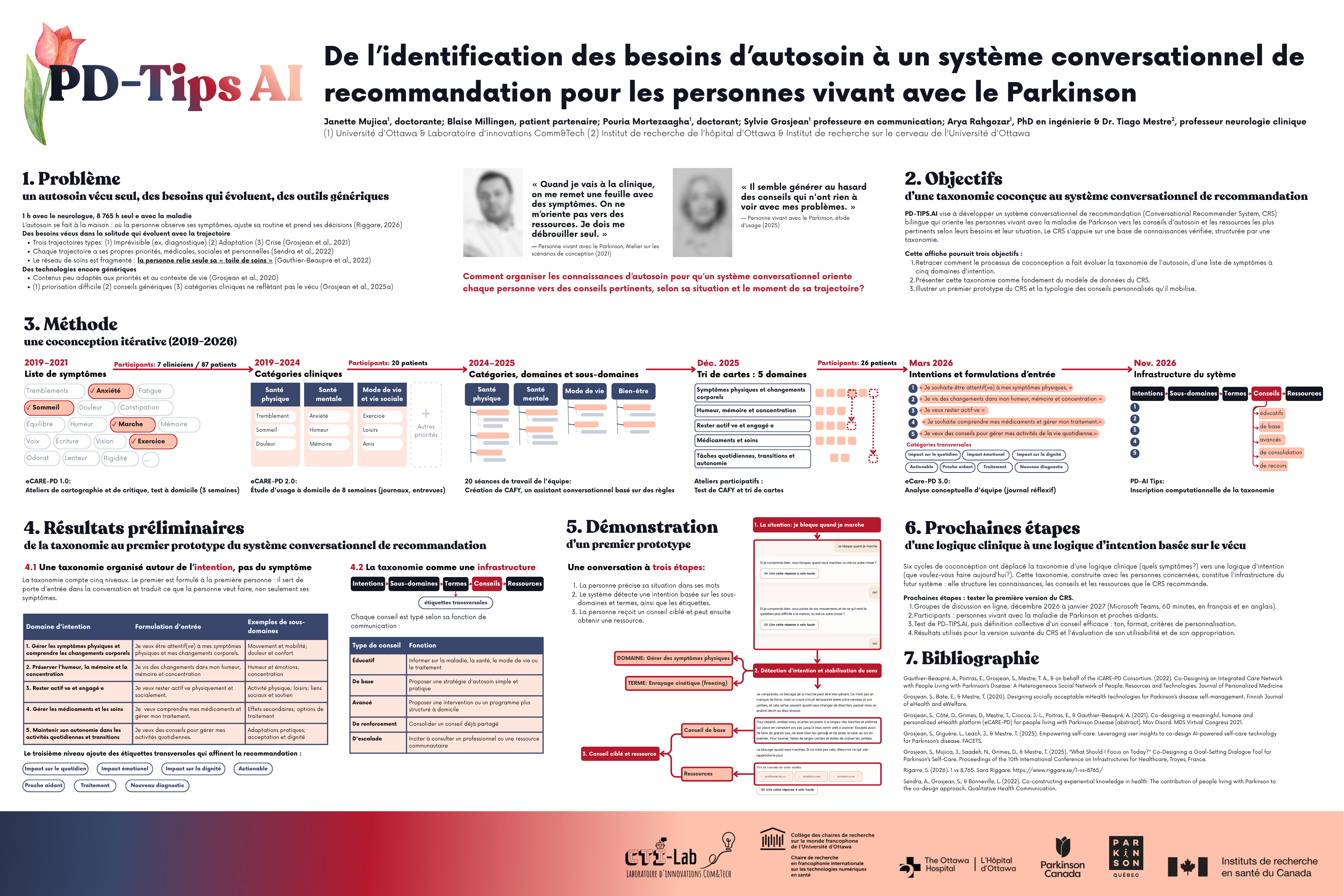
I participated in the launch of the PD-AI Tips project and became a member of its steering committee, which I now attend monthly. The project aims to co-design an AI-driven bilingual self-care technology that provides personalized care tips and resources to support people living with Parkinson’s disease.
Facilitation of patient workshops: Testing chatbot prototype & self-care taxonomy
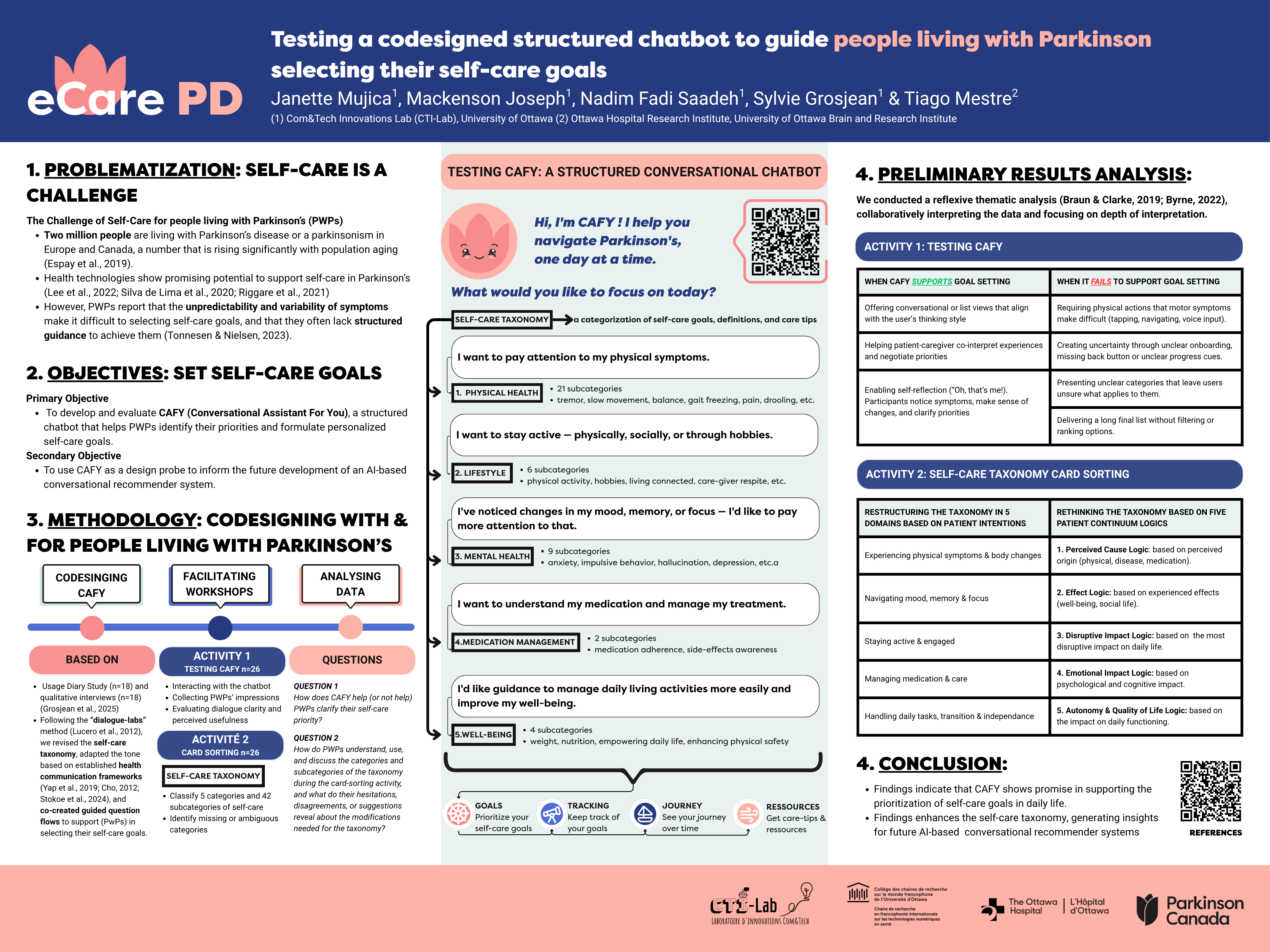
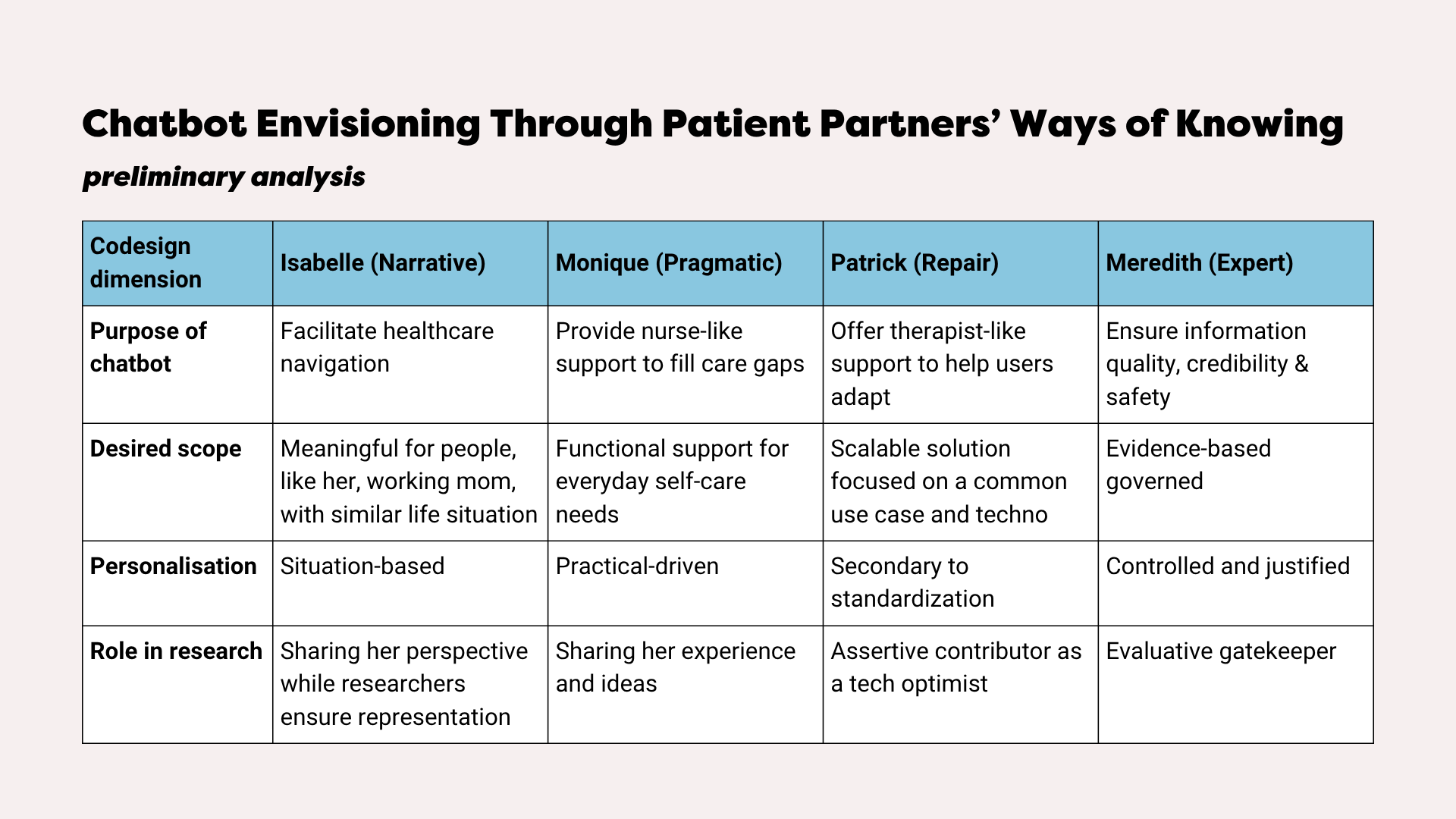
We facilitated patient workshops at The Ottawa Hospital Civic Campus to evaluate CAFY (Care Assistant For You), a structured chatbot that helps people living with Parkinson’s identify their priorities and formulate personalized self‑care goals. We use CAFY as a design probe to inform the future development of an AI‑based conversational recommender system.
Testing a co-designed structured chatbot to guide people living with Parkinson's selecting their self-care goals
I presented preliminary findings from patient workshops about CAFY and self-care taxonomy at the University of Ottawa Engineering & Computer Science Graduate Poster Competition.
University of Ottawa Engineering & Computer Science Graduate Poster Competition. University of Ottawa. Ottawa, Canada.
Modeling AI recommendation logic: The PD-TIPS.AI project
We facilitated a workshop where participants simulated the decision-making logic of the PD-TIPS.AI conversational recommender system, translating clinical and lived-experience knowledge into personalized self-care recommendation pathways for people living with Parkinson’s disease.
DH Toolbox Workshop, Digital Humanities Data Lab. University of Ottawa. Ottawa, Canada.
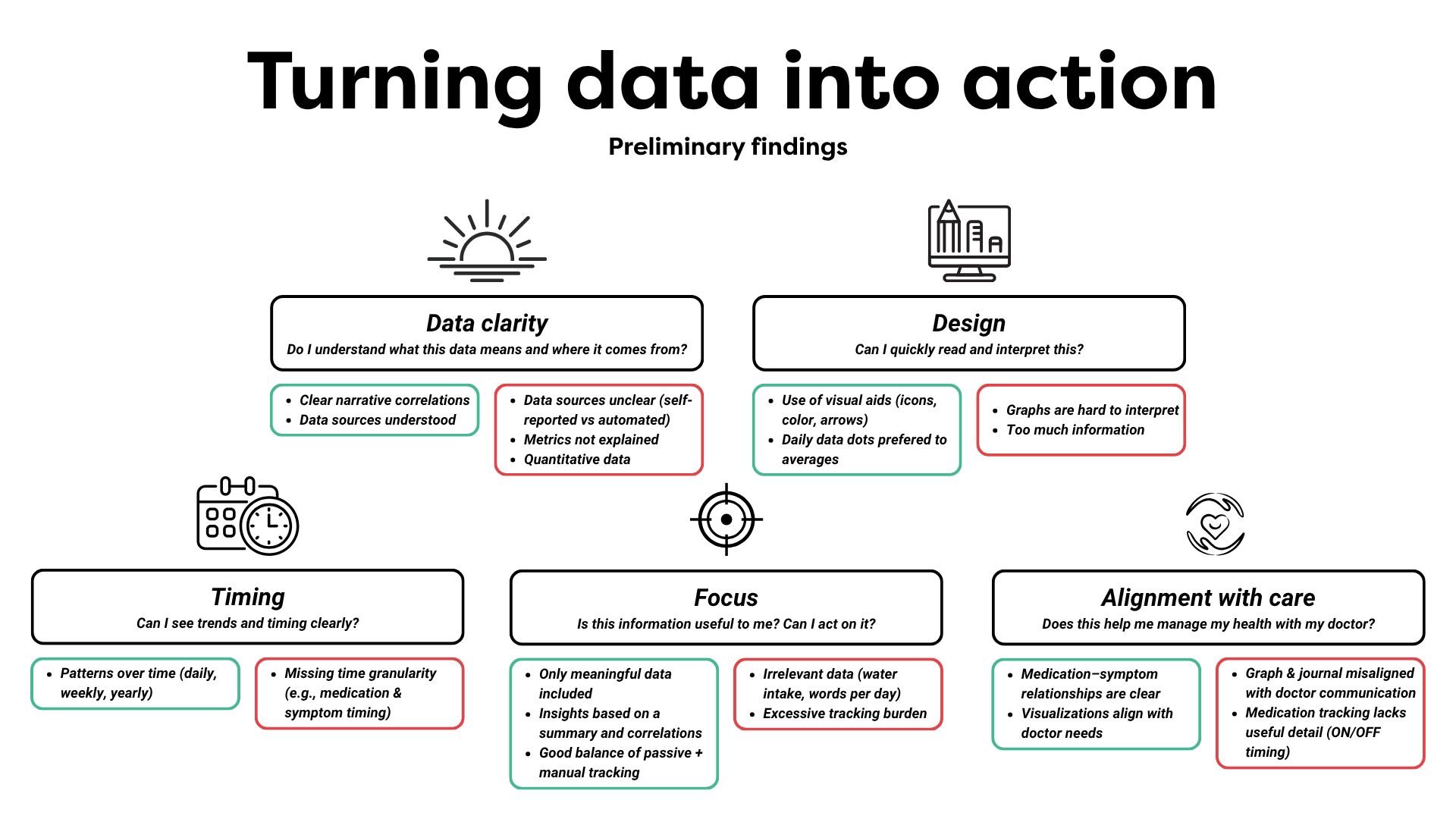
Facilitation of patient workshops: Testing the actionability of care tips and self-care data visualizations
We facilitated patient workshops to evaluate the actionability of self-care tips tailored to different patient personas and self-care data visualizations.
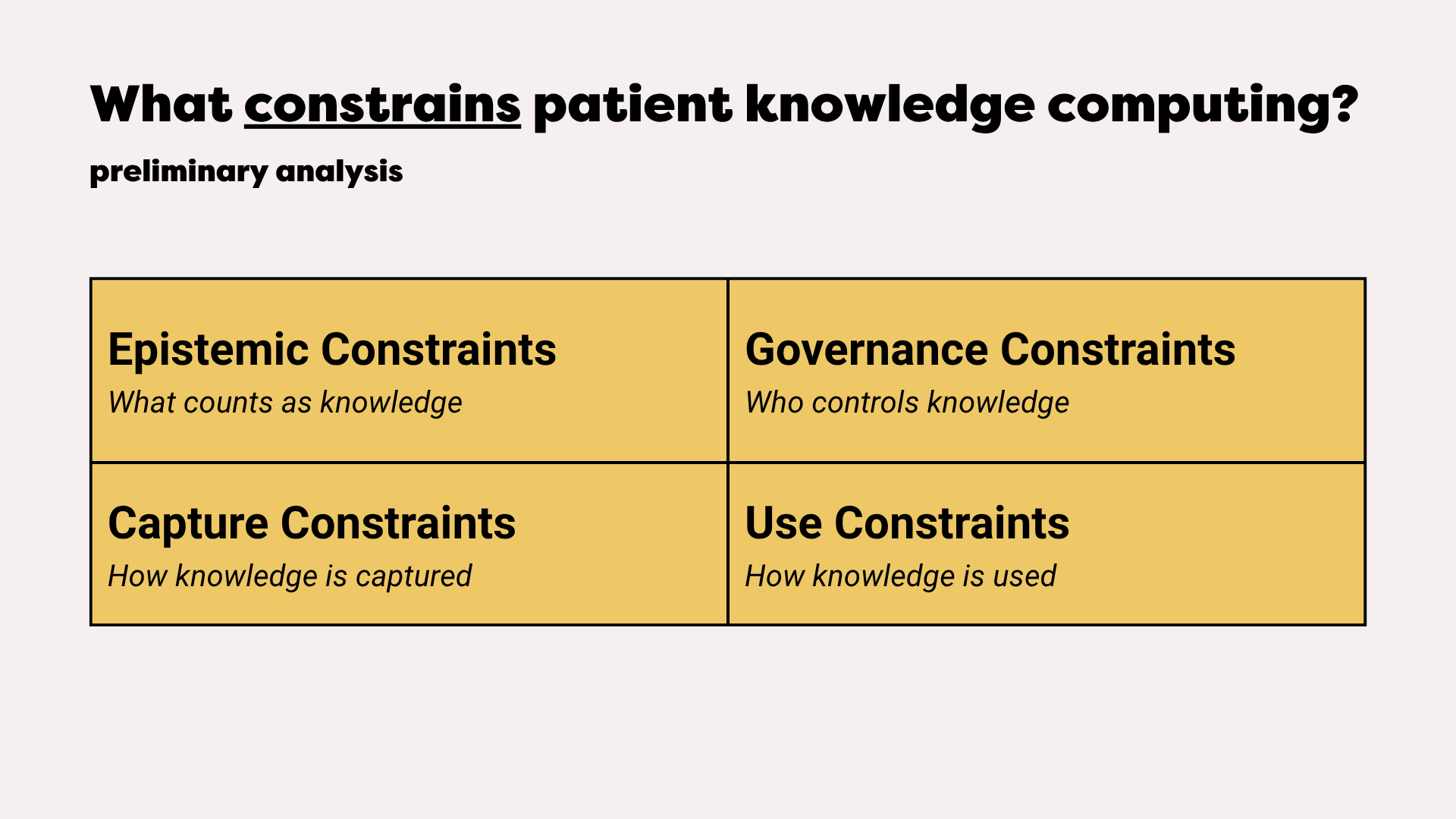
Computing Patient Knowledge in AI Chatbots: A Scoping Review
I conducted a scoping review of the literature to identify how patient knowledge is computed in AI chatbots. In collaboration with peers and a librarian, I learned how to conduct a review, including developing a search strategy, screening articles, and synthesizing findings.
DTI 8102 - Interdisciplinary Doctoral Seminar taught by Professor Daniel Amyot at University of Ottawa. Ottawa, Canada.
I presented the preliminary findings of a scoping review, Computing Patient Knowledge in AI Chatbots, conducted as part of the DTI Seminar taught by Professor Daniel Amyot, at the uOttawa research seminar De l’engagement des patient·es à la simulation : Regards croisés sur la recherche et la formation en santé (French).
Séminaire de recherche — De l’engagement des patient·es à la simulation. University of Ottawa. Ottawa, Canada.
Online interviews with people living with Parkinson's: Creating personas and usage scenarios for a self-care recommendation system
I conducted online interviews with people living with Parkinson’s disease to develop personas and usage scenarios for a self-care recommendation system.
Com&Tech Innovations Lab, University of Ottawa. Ottawa, Canada.
Translating workshop results: A low-fidelity prototype for visualising self-care journeys
Based on the patient workshop and ideation session, I developed a low-fidelity prototype for visualising self-care journeys that was implemented in e-Care PD by Wen Qi.
Com&Tech Innovations Lab, University of Ottawa. Ottawa, Canada.
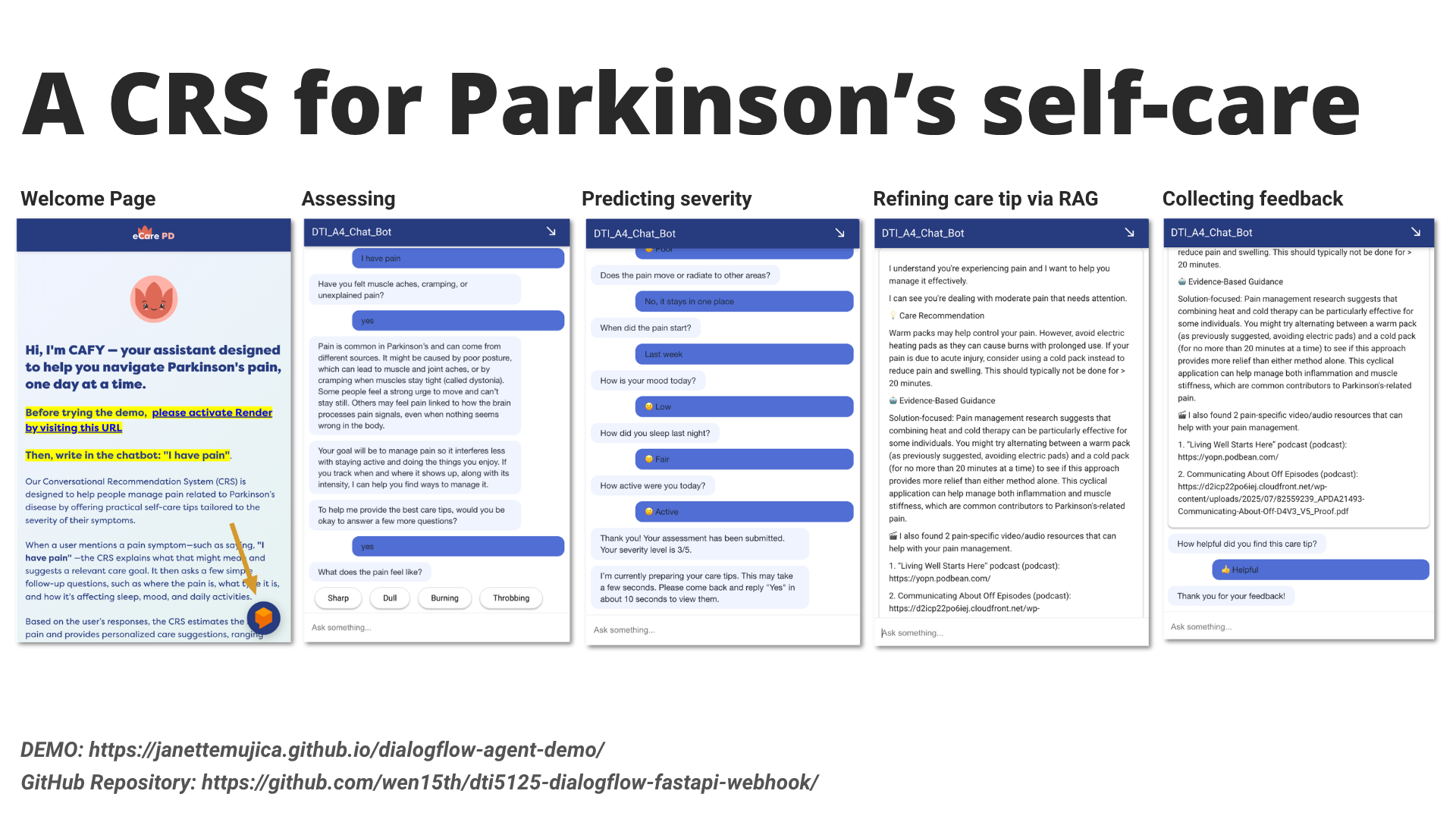
Wen Qi integrated front-end and back-end enhancements, including the care-tips logic engine, into a new version of e-Care PD. This demo will be developed with enhanced security support and other requirements provided by an external vendor.
Perspectives de la relève en innovation sociale : former les actrices et acteurs de demain face aux défis sociétaux
I will participate in a panel on emerging researchers’ perspectives in social innovation, presenting the e-Care PD project, Transforming Care, Strengthening Communities: The Evolution and Impact of e-Care PD (2018–2026), at the Entretiens Jacques Cartier hosted by UQAM.
Transformer les soins, renforcer les communautés : l’évolution et les retombées d’e-Care PD (2018–2026), Table ronde, Entretiens Jacques Cartier. UQAM. Montréal, Canada.